

AI isn’t new to manufacturing. Vision systems can already spot defects; predictive maintenance models can keep bearings from failing unexpectedly; and scheduling software can adjust production on the fly. What’s changing in 2026 is the reach and capabilities of these tools as well as their potential to expand returns on a plant’s investment in the cost, time and effort of their engineering, deployment and operator training.
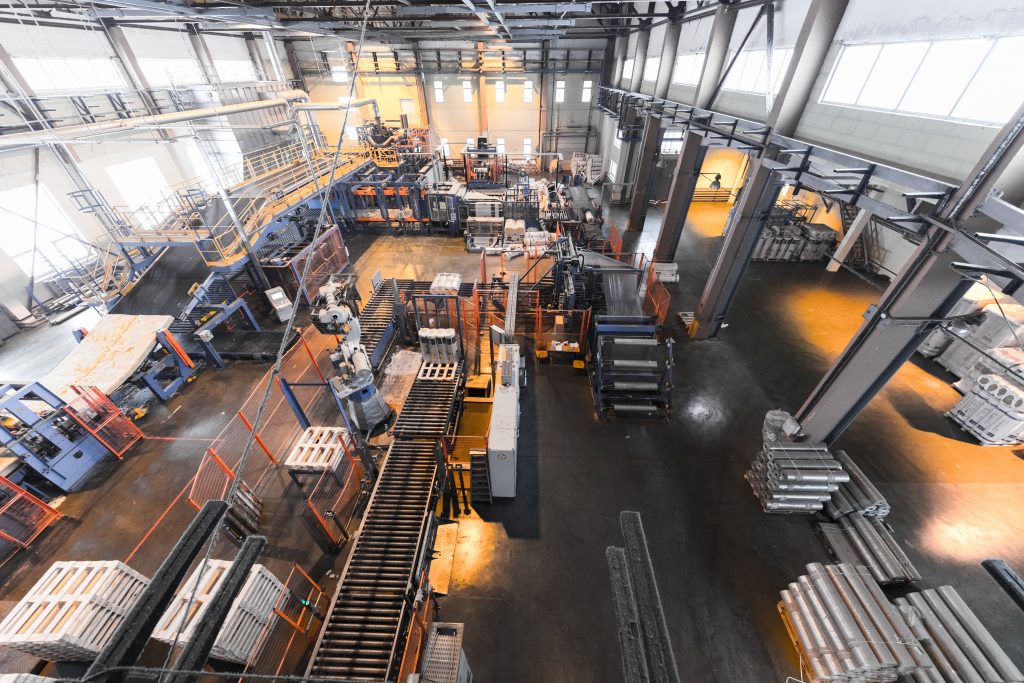
For example, ever-more powerful edge processors can now bring deep-learning AI models directly to machines, data pipelines are cleaner and standards for safe deployments are clearer. Together, they make AI more accessible, easier to govern and ready to deliver results plant-wide rather than in isolated, disconnected deployments.
For years, most industrial AI projects often operated in limited ways, such as a camera tied to a single work cell, a vibration model running in the cloud or an optimization routine tuned by a data-science consultant. AI models required heavy compute power that didn’t belong on the plant floor. Data came from sensors that communicated via different protocols or carried inconsistent labels. And no one could point to a standard playbook for deploying AI safely in a regulated environment.
Those obstacles are finally giving way and in 2026 and beyond will brighten AI’s ROI prospects even more. Let’s take a closer look at how that’s happening in greater detail.
Deep-Learning Models at the Edge
The biggest shift is physical. Manufacturers no longer have to stream gigabytes of sensor or video data to the cloud for inference. Advanced edge processors — industrial PCs, gateways and controllers equipped with onboard GPUs or neural chips — can run advanced deep-learning models alongside the equipment they monitor. In effect, they bring the intelligence to the data instead of the other way around.
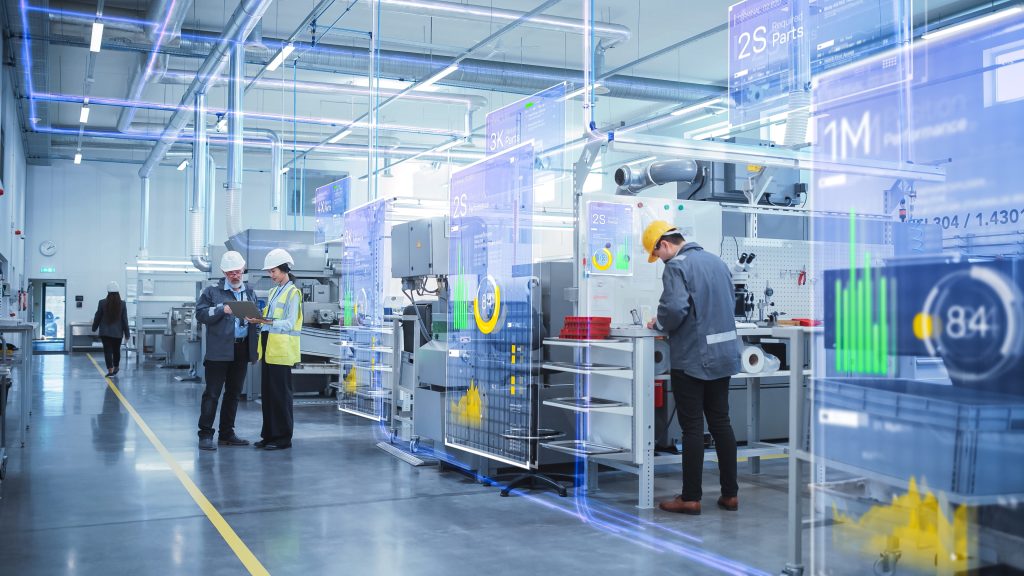
This local processing means decisions can happen in milliseconds, not seconds, and sensitive production data never leaves the OT network. For example, a line camera can flag a defect, or a compressor can predict its own failure without touching an external server. Ruggedized devices such as NVIDIA Jetson modules, Intel Movidius units or purpose-built industrial gateways from automation vendors have made that capability affordable and reliable for the first time.
Cleaner, Connected Data Pipelines
The second change is structural. In many plants, data once moved through a tangle of legacy connections, proprietary tag names and mismatched sampling rates. AI struggled to make sense of it. The industry’s move toward standardized communication protocols — OPC UA, MQTT, IO-Link and the emerging Unified Namespace (UNS) model — is fixing that.
When tags share consistent naming, units and context, engineers can route data directly into training pipelines without weeks of manual rework. Many modern historians and HMI/SCADA systems now include built-in connectors for machine-learning frameworks, so the barrier between control and analytics continues to shrink. The result is faster model development and easier validation — both essential for moving AI from pilot to production.
Clearer Standards, Safer Deployments
A third AI enabler assisting industrial AI deployments is clarity. Until recently, manufacturers had to invent their own risk and governance processes for AI, if they had them at all. That vacuum created an understandable hesitation to consider using AI applications on plant floors, especially in safety-critical scenarios. Now, a combination of global and national frameworks is filling that gap.
The EU AI Act, taking effect in stages between 2026 and 2027, defines which systems are considered “high risk” and what documentation, human oversight and performance monitoring they require. Even companies outside the European market are watching closely because the same principles — traceability, accountability and proof of control — will shape customer and regulatory expectations everywhere.
In the U.S., the NIST AI Risk Management Framework provides a practical, voluntary standard for identifying and mitigating AI risks in operations. It encourages teams to treat AI much like they already treat functional safety under IEC 61508 or ISO 13849: validate before release, monitor in service and maintain rollback paths.
These guidelines may sound bureaucratic, but they’re actually liberating. With defined benchmarks for safety and transparency, engineers can focus on results instead of worrying about compliance guesswork.
Reimagining Legacy Workflows
Taken together, these developments make AI far more usable than it was even a few years ago. Intelligence can now live where the work happens, data flows with context intact and rulebooks for AI’s responsible use are standardized and available. That combination marks a turning point.

AI’s real opportunity lies beyond incremental efficiency gains. The plants that will benefit most won’t simply use AI to “pave the cowpath” of legacy workflows, but to reimagine them entirely — to build an autobahn instead of another dirt road.
For example, consider a packaging line that once relied on static inspection stations and fixed-speed conveyors. Instead of using AI just to improve defect detection by a few percentage points, manufacturers are beginning to redesign the workflow itself — using AI to balance workloads across parallel stations, reroute material flow dynamically and predict the most efficient changeover sequence. The result isn’t just better inspection; it’s a smarter, self-adjusting production rhythm.
Use Cases to Consider for 2026
This brings us to the real question for 2026: where will AI make the most practical difference the soonest, to maximize a plant’s return on its investment in expense, time and staff efforts? Here are five possibilities worth evaluating:
1. Quality Inspection That Sees What Cameras Miss
While many plants may already use machine vision, product defects can still slip through when lighting conditions shift or materials vary. Over the next year, vision systems are expected to evolve through multimodal sensing, combining depth cameras, acoustic signals and vibration data with standard imagery.
These richer inputs can help detect surface and subsurface flaws that a 2D lens can’t capture, and do so at higher line speeds. At the same time, self-supervised machine learning will reduce the need for massively labeled image sets whenever a product undergoes a change. Retraining models will take hours, not days, ensuring reliable inspections despite constant changeovers. Operators will notice fewer false rejects and higher, more consistent first-pass yields.
2. Maintenance that Drafts its Own Work Orders
Condition-monitoring systems already flag unusual vibration or electrical current patterns in motors, drives and associated equipment. The next step is prescriptive maintenance models with agent-based AI tools. These will analyze sensor data trends, compare them to past failures and create a maintenance ticket with a probable cause, spare-part list and downtime window. Technicians will still provide oversight. This approach shortens diagnosis time and helps maintenance teams plan around production, not react to it.
3. Process Optimization with a Digital Copilot
Fine-tuning loops and recipes have always relied on operator skill. New process copilots will suggest set-point or feed-rate adjustments aimed at improving yield or energy efficiency. Each proposal includes its reasoning and can be reversed instantly. The technology supports operators rather than replacing them, making minor, explainable corrections that add up over long runs. Plants testing these systems report measurable improvements in cycle time and cost without compromising process stability.
4. Energy Management That Never Sleeps
Energy dashboards have long provided plants with backward visibility into a facility’s power consumption and efficiency. In 2026, AI will improve energy dashboards by moving them from static data displays to dynamic, intelligent tools that offer predictive analytics, real-time power optimization and anomaly detection. This includes predicting equipment failures to enable preventative maintenance, optimizing production schedules for better energy efficiency, identifying hidden inefficiencies in energy use and using natural language processing (NLP) for easier data access.
AI-enabled edge controllers will monitor compressors, ovens and chillers in real time, adjusting parameters by fractions to avoid peak tariffs and reduce emissions. Every change will be logged, providing a clear link between actions and savings. The result is steadier consumption, reduced energy costs and progress toward sustainability goals achieved quietly in the background.
5. Intralogistics That Orchestrates Itself
Autonomous mobile robots and cobots are already in common use, but AI can change how they coordinate their movements. For example, instead of fixed routes and static schedules, AI-enabled systems will assign and reroute tasks based on congestion, safety zones and work-in-progress priorities. The result is smoother material flow and fewer idle machines. Workers will still oversee operations, but AI will handle the constant traffic management automatically.
What Makes This Possible
These advances come from steady progress, not sudden breakthroughs. Data standards such as OPC UA and MQTT are now interoperable across vendors, making sensor data usable without the need for weeks of cleanup. Ruggedized gateways with built-in GPUs or neural processors can now run sophisticated models locally, keeping latency low and sensitive process data behind the plant firewall.
The human element matters just as much. Each model becomes another asset to maintain, with its own versioning and validation steps. Plants that fold these routines into their standard work will find AI adoption far smoother. As one operations lead explained, “We treat each model like a component. It has a number, a record and a schedule.”
Governance as Part of Engineering
For any manufacturer selling into the European Union, the EU AI Act will soon make AI governance a necessity. The law classifies AI that affects product quality or safety as “high risk,” requiring documentation, oversight and performance monitoring starting in August 2026, with stricter rules for safety-critical systems the following year. Plants outside the EU would be wise to follow the same discipline. The NIST AI Risk Management Framework offers a straightforward approach: identify the use case, confirm human oversight, document data sources and track performance drift.
Forward-thinking facilities are already folding these steps into existing quality systems. Model cards sit beside calibration sheets, update logs record who approved each change and dashboards flag when confidence scores slip. These habits keep the technology accountable and make audits routine rather than stressful.
Piloting For Success
Effective AI deployment pilots start small and are specific in their intent and scope. So, for example, instead of declaring a digital transformation, teams should focus on one measurable goal such as reducing scrap, cutting downtime or saving energy.
To start, they should use AI to analyze data already collected and feed the AI model’s results back to the PLC or HMI as familiar tags. Operators stay in charge, approving or rejecting recommendations and explaining their decisions. If needed, they can add sensors to equipment to enhance their data collection. Once results hold steady through several production runs, the system becomes part of normal operations.
One process engineer who led an early AI rollout summed it up neatly: “Our objective wasn’t to prove that AI works, it was to prove it fits the way we work.” That mindset keeps efforts practical and repeatable, turning a single pilot into a plant-wide program.
Looking Ahead
By the end of 2026, most manufacturing facilities will still resemble one another. Operators will be walking the line, technicians keeping watch on equipment performance and engineers checking yields. The difference between plants will be how quickly their information flows and, in turn, how it accelerates responsiveness to changing conditions, flexibility in that responsiveness and process visibility with much more granularity in real time.
Anomalies will surface before failures, energy peaks will smooth out autonomously and vision systems will adapt to new products without long delays. Governance frameworks will run quietly in the background, giving plant managers and enterprise executives confidence that AI is helping, not risking, the process.
Plants that start preparing now by cleaning data, modernizing gateways and documenting procedures will be ready to exploit AI’s potential to provide greater OEE with substantial ROI and, as a result, greater competitive advantage.
Bill Makley, Principal, BMC Consulting
For more than 30 years, Bill Makley has advised industrial enterprises worldwide on automation modernization and cybersecurity. He has been involved in AI deployments going back 10 years to monitor conditions of remote equipment operating in such diverse environments as Chilean mines in the Andes and oil and gas wells on the ocean floors of the North Sea.