

Automating livestock feed mixing in an accessible way provides the ideal solution for dairy farmers.
By Miles Brake, W.G. Dairy Supply, Inc.
W. G. Dairy Supply, Inc. (W.G. Dairy) is an innovative equipment and services supplier in the agricultural space. A portfolio of mechanical and automated equipment, and the company’s ability to provide additional automation and integration services, has proven to be an important differentiator for supporting their clients. When it comes to automating dairy operations for reliability and efficiency, there is no aspect too large or small to consider—from milking to feeding, environmental controls, and sanitation—regardless of the size and structure of farm operations.
With operating margins in the dairy industry often low and volatile, it is crucial to keep automation investments economical in order for them to be accessible and successful. For smaller operations, it is common to add automation in phases, implementing custom projects that leverage existing infrastructure, wherever possible.
One area of specialty for W.G. Dairy is feed and grain handling. Drawing on their extensive experience working with many major automation suppliers, the technical team has developed proven approaches for providing custom controls for integrating unique applications ranging from grain storage and drying to mixing and transport. So, when a client needed to upgrade their existing feed bins to work with a new automated mixer, W.G. Dairy was up for the challenge.
Mixing things up
Total mixed ration (TMR) is a method of feeding livestock by combining minerals, supplements and grains with forages to create a nutritiously balanced feed. To achieve specific formulations, ingredients in precise amounts are carefully mixed to create a uniform feed.
W.G. Dairy’s client had existing feed bins, but they were looking to improve their feed dosing capabilities. They especially liked a specific automated feed mixer offered by W.G. Dairy, but this equipment would not be plug-and-play with existing on-site equipment. Fortunately, the technical team has performed installs with this equipment—ranging from small to large—to help their clients upgrade operations while preserving investments in existing assets (Figure 1).
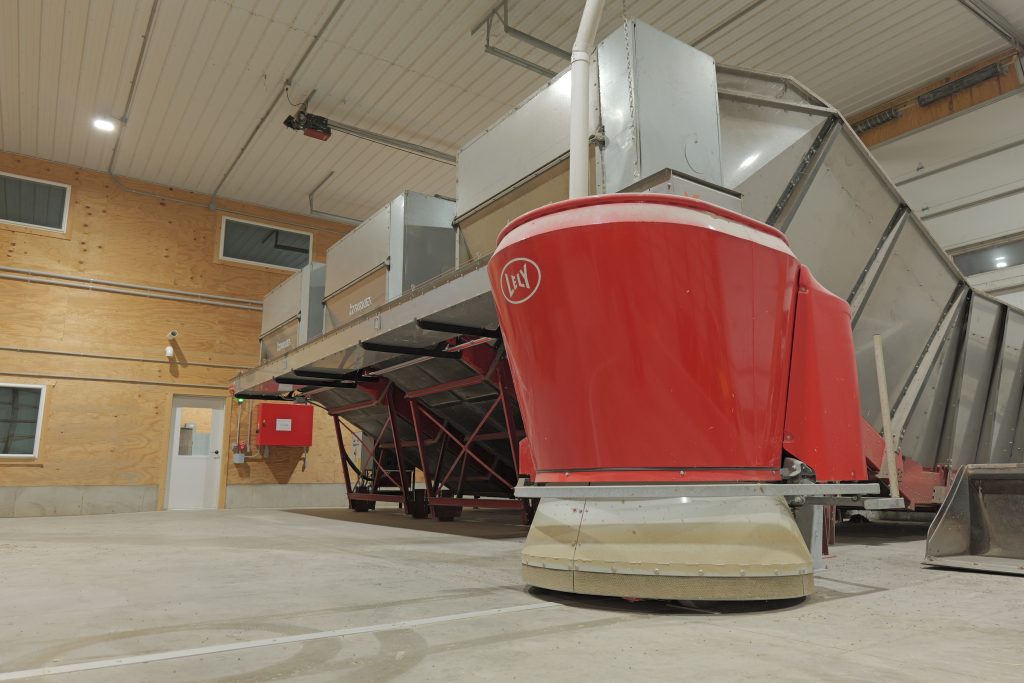
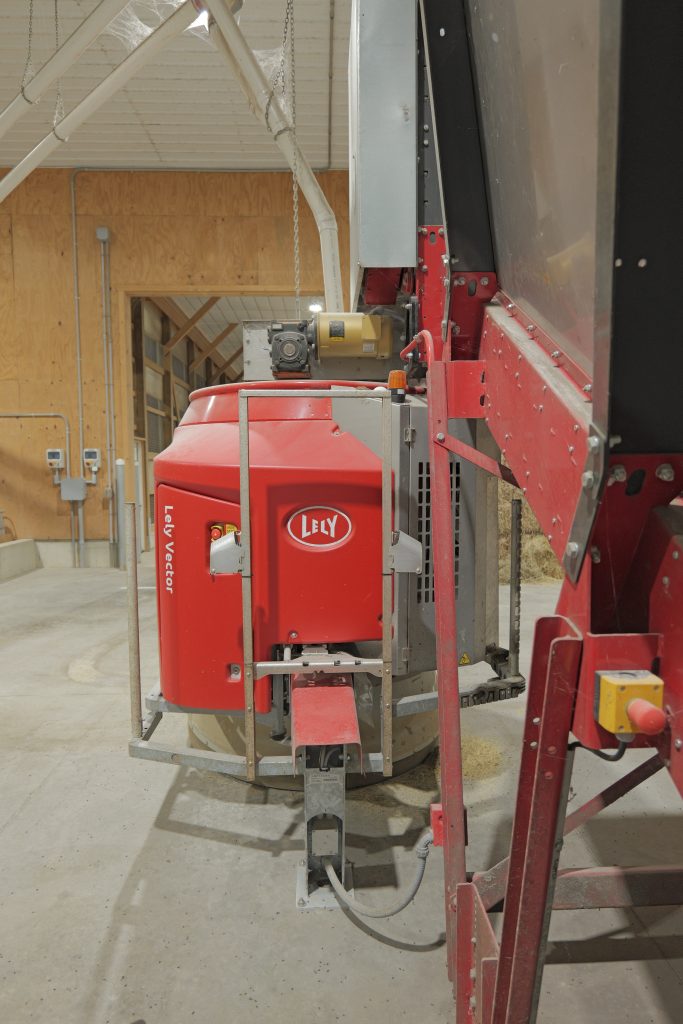
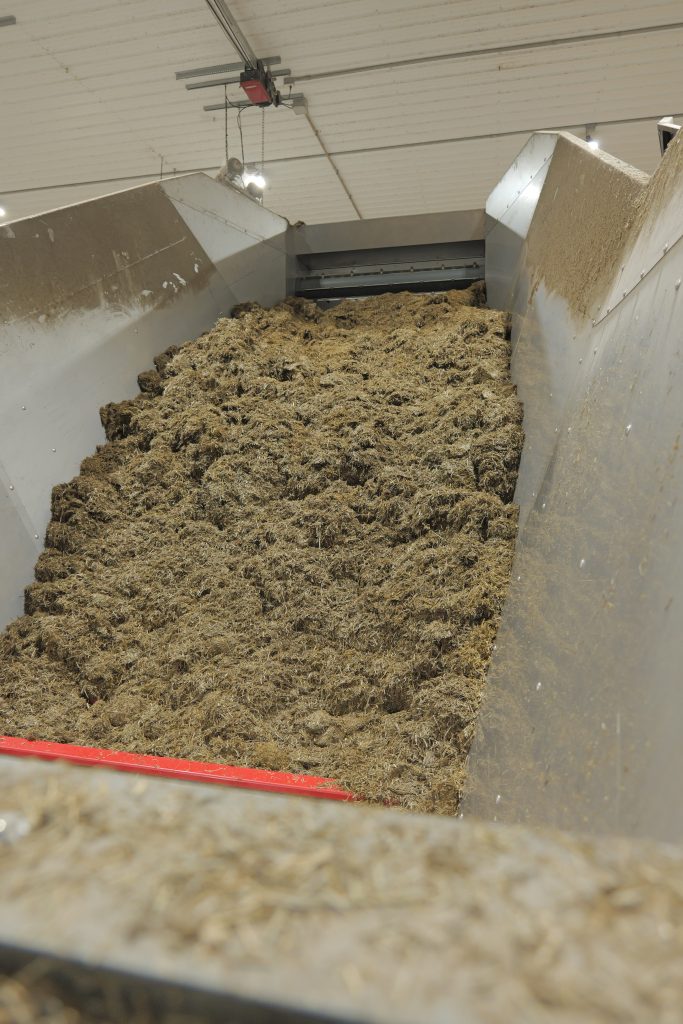
Figure 1a, 1b, 1c: As a supplier of a wide range of agricultural equipment, W.G. Dairy has found that the ability to offer automation and integration services provides more opportunities for them to support clients, especially by coordinating new and existing systems into a complete solution.
The feed mixer utilizes load cells to monitor the amount of each ingredient as it is added to the mixer. In addition, the mixer has the ability to “call” for each material in a sequential manner, so it can obtain accurate weighments of each ingredient. In fact, the mixer automation is able to learn the weight of “in flight” material after the call for an ingredient has stopped, allowing for self-adjustments and better accuracy. When all ingredients are in the mixer drum, they are blended with an auger-like motion into a homogeneous feed that is ready for distribution to the livestock. In this case, the challenge was that the automated feed mixer would not natively interact with the existing feed bins, their controls, and the conveyor, so W.G. Dairy would need to create this integration piece.
CLICKing into place
Controlling the precise ingredient ratios requires that the controls for the feed bins, conveyor, and mixer communicate with each other. For all types of smaller- to medium-sized integrations, W.G. Dairy has significant experience using various AutomationDirect products. In this application, the best fit was determined to be the CLICK PLUS programmable logic controller (PLC) (Figure 2). The affordable, stackable micro modular controller has proven to be a straightforward, reliable solution for syncing up the controls between multiple pieces of equipment—the new automated mixer and existing feed bins.
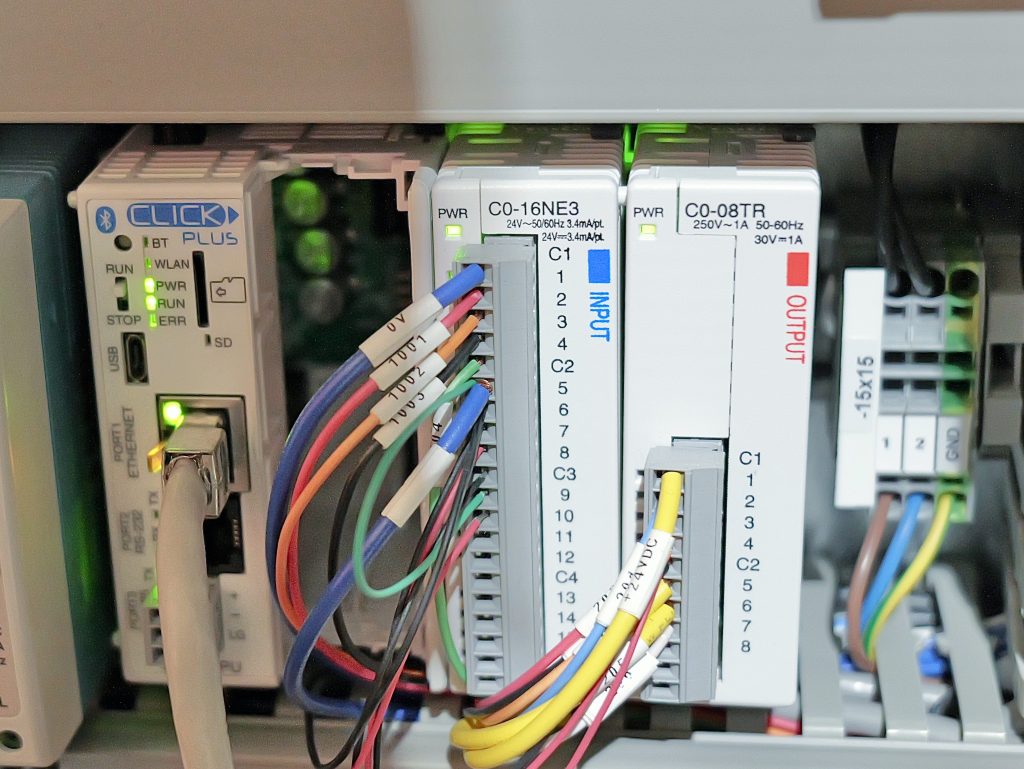
Basic hardwired discrete input/output points are used to monitor product “call” requests from the automated feed mixer, and to command the feed bin equipment. When the PLC receives a call input for a given material, it then sends an output signal to start the conveyor and open a valve on the appropriate feed bin to start the flow of the desired ingredient. The mixer utilizes load cells to weigh the incoming material and discontinues the call at the appropriate time. The PLC will close the source valve but continue to run the conveyor for a time period to empty the remaining material into the mixer (Figure 3). This process repeats for each bin until the ideal amount of each ingredient has entered the mixer and the mixing process activates.
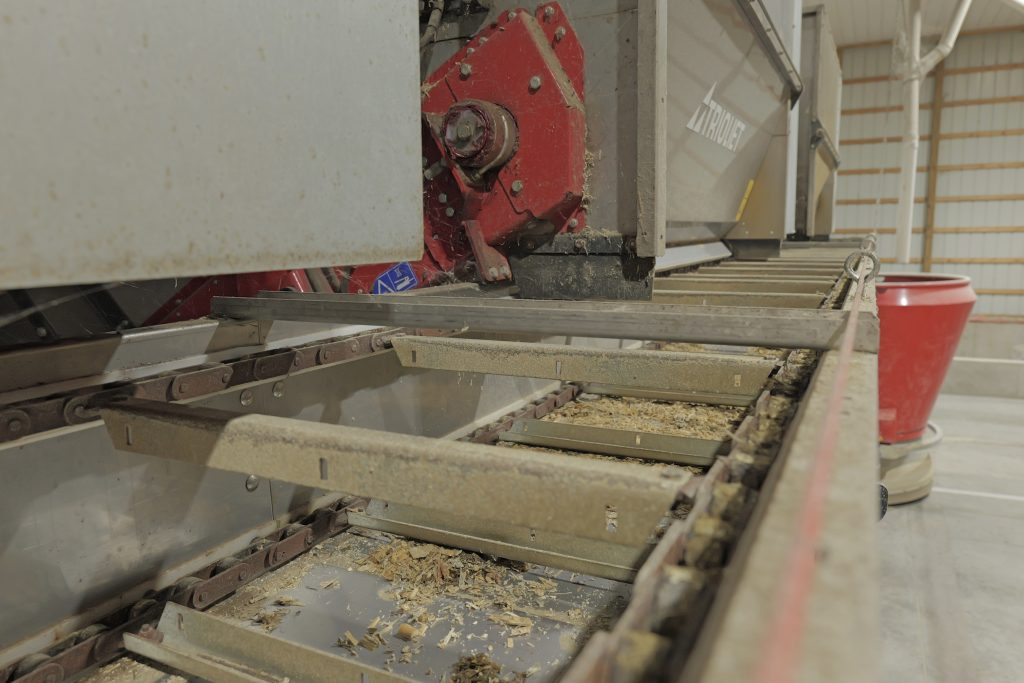
For each weighment, the mixer controller performs a calculation to determine how much material was “in flight” after the material call was discontinued, and uses a running average of this value to adjust future calls so the batch can be accurately created. This ability to coordinate with the PLC and handle this calculation is important to maintain feed accuracy even as material types, consistencies, and other factors such as humidity impact the handling for each product.
As an added safeguard, a ProSense inductive proximity sensor from AutomationDirect was installed on the undriven end of the conveyor belt. If the conveyor is commanded to run but a malfunction occurs—such as the chain coming off or the drive mechanism breaks—then the proximity sensor detects a lack of expected pulses, enabling the PLC to shut down the system in a safe manner. This feature also prevents excess material from building up on the conveyor line.
Free software for the farm and factory
As a technical service provider, W.G. Dairy must be prepared to support clients even after the initial project implementation, and many clients opt to contract with the team for ongoing professional services. While many farms do have on-site technical personnel and mechanics, it is less common for them to be able to self-support automation systems.
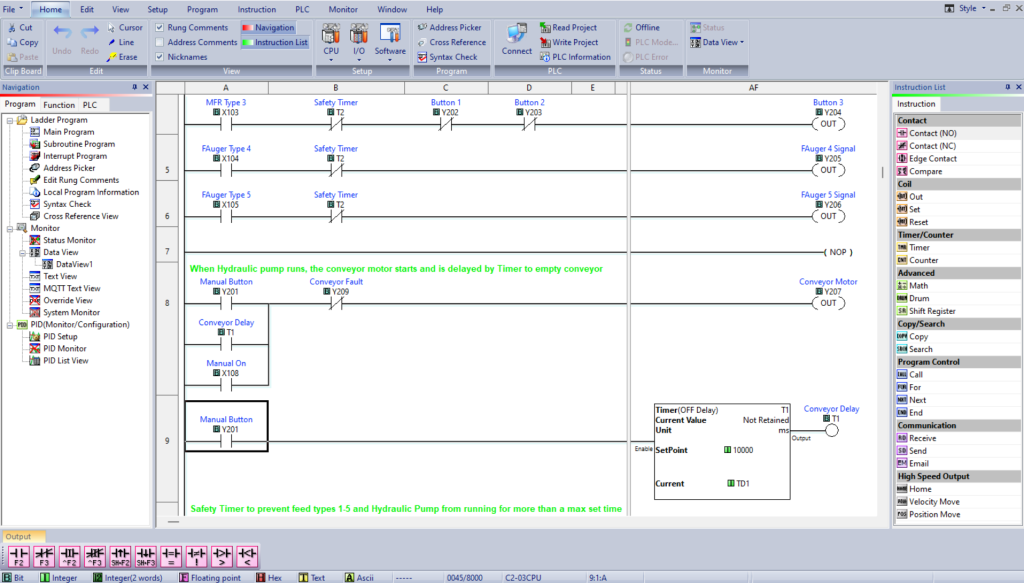
Figure 4: The AutomationDirect CLICK programming software is free and easy to use, making the platform accessible for systems integrators and end users alike. It provides an ideal way for those entering industry to learn industrial automation techniques.
Many clients work with W.G. Dairy to establish a secure remote PC connection, so that the services team can adjust PLC parameters and perform other support remotely, enabling issues at rural farms to be addressed quickly and efficiently in all weather conditions without travel delays. The professional services team provides a proactive, preventative approach to monitoring operational status as well as maintaining 24-hour emergency support.
Moo-ving fast
When it comes to supporting clients with smaller, custom integration projects, the direct purchasing model provided by AutomationDirect has been a game-changer for W.G. Dairy. The ability to access transparent pricing and stocking levels via the website saves tremendous time and effort during the procurement process. In many instances, parts are delivered faster than it would take to complete the traditional process of identifying budget-friendly options, confirming acceptable lead-times, waiting for pricing quotes, and generating a purchase order.
Like many successful projects, delivering and maintaining the automated feed mixer solution was a team effort. Finding a solution that yielded reliable results and was accessible for a wide range of personnel skill levels—including seasoned automation professionals as well as junior employees and farm staff with no automation background—proved to be crucial.
The resources and product support available from AutomationDirect are best-in-class. Extensive online resources including free PLC training and educational YouTube videos allow users to quickly search a product such as “CLICK PLC” or dive deep into a topic such as “PID control”. The combination of support, training, a wide variety of products, and fast shipping times, makes AutomationDirect essential for the controls department at W.G. Dairy Supply, and has helped the team to mentor young members as they develop into skilled technicians.
Industrial automation products that are affordable and easily implemented can level the playing field for smaller farming operations—particularly those needing custom solutions without in-house controls expertise. Often, the elements that hold everything together are those that add significant value. With reliable, easily accessible components that integrate seamlessly with other vendors, W.G. Dairy delivers complete, high-quality solutions that enhance the value of their clients’ operations.
All figures courtesy of W.G. Dairy Supply, Inc.
Author Bio
Miles Brake is just one member of the automation team at W.G. Dairy Supply, Inc. Since 1964, W.G. Dairy has been serving, impacting, and engaging with customers and the community by providing dairy and agricultural related products and solutions. This work has expanded over the years to include a variety of custom automation solutions, as the industry and associated technologies have evolved.