

The right surge suppression technologies help protect valuable equipment and digital systems from electrical surges, while ensuring designs comply with regulatory requirements.
Electrical surges represent a persistent yet often underestimated threat to today’s technologically advanced commercial and industrial facilities. In this Automation World December 2025 article titled Industrial Surge Protection: Essential Technologies and Installation Standards for Automated Equipment Safety, David Saenz of AutomationDirect covers various details, regulations, and products associated with creating surge-resistant systems.
Understanding Electrical Surges
Far from being a mere convenience, surge suppression is now a cornerstone of system resilience, regulatory compliance, and business continuity. The proliferation of intelligent devices—ranging from IIoT sensors and EV charging stations to data centers and power electronics—means that more assets than ever are vulnerable to electrical disturbances.
Many people are familiar with using plug-in surge suppressor strips in homes and offices. However, the stakes are far higher in industrial and commercial environments, where disruptions can trigger cascading effects: equipment damage, data loss, extended downtime, product loss, and even compromised safety.
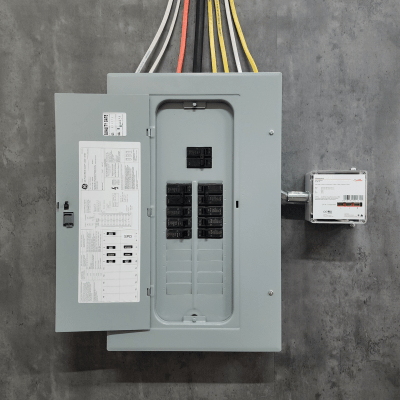
Perhaps unexpectedly, most surges originate from within a facility itself. Internal events such as motor starts, VFD operation, and electrical switching actions can generate harmful voltage spikes. In addition, external surges from grid events and lightning remain a potent risk. The consequences are not always immediately apparent, but intermittent system failures, idle personnel, and mounting troubleshooting labor costs can quietly degrade operational efficiency and profitability.
Requirements and Technologies
To address these multifaceted risks, modern standards, such as UL 1449, IEC/EN 61643, IEEE C62, and NFPA 70 (NEC), have broadened their scope. They now dictate surge protection not only for industrial machinery but also for residential and commercial installations, underscoring the necessity for designers to fully understand both the sources of surges and compliance requirements.
Surge Protective Devices (SPDs) are the primary line of defense. These devices, employing technologies like metal oxide varistors (MOVs) and gas discharge tubes (GDTs), are engineered to detect and safely handle and clamp excess voltages before they can reach sensitive downstream equipment. SPDs are categorized into several types (UL Types 1–5) to suit a range of installation scenarios—from service entrances to point-of-use and component-level applications.
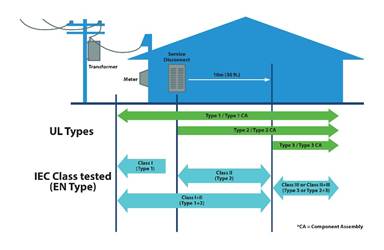
Today’s market offers an array of SPD form factors: panelboard-mount, DIN rail, housed in enclosures, terminal blocks, and specialized solutions for data and telecom circuits, including Ethernet and PoE.


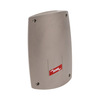
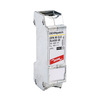
Designers must select SPDs with appropriate characteristics—including surge current rating, short circuit current rating (SCCR), response time, maximum continuous operating voltage (MCOV), and more—to ensure proper protection. Many modern SPDs also incorporate local indicators or signaling features for remote indication to alert personnel when maintenance or replacement is required, addressing the sacrificial nature of some of these devices.
As digital networking applications expand, the protection of low-voltage data and telecom lines is increasingly vital. Standards like UL 497B now govern these applications, and industry vendors have responded with specialized SPD products tailored for these needs.
Electrical Surge Suppression is Essential
Robust surge suppression is essential for safeguarding assets, ensuring uptime, and complying with regulatory mandates. It is a strategic investment that supports both operational continuity and long-term asset protection.
AutomationDirect offers a range of SPDs in varying form factors so that designers and end users have the options they need for electrical surge protection.
By leveraging the right combination of SPD technologies and best practices, designers can future-proof their systems against the growing spectrum of electrical threats. Designers can visit the electrical power portion of the AutomationDirect website to explore the wide variety of surge suppression technologies available to protect many types of installations.
About the Author

David Saenz is a product engineer at AutomationDirect. He joined AutomationDirect in 2024, and holds a BSEE degree from the Georgia Institute of Technology. Before joining the company, David Saenz spent 10 years supporting a medical device manufacturing facility as a controls and electrical engineer. He previously worked as an I&C engineer supporting civilian nuclear power generation engineering projects.