

By: Kristin Lewotsky, contributing writer
Industry 4.0 is a conceptual framework that applies industrial networking, data-gathering and analytics, and smart devices to cut costs and boost efficiency. It emphasizes improving performance by automating processes and removing humans from the loop. Industry 4.0 led to substantial gains in productivity and profitability. It wasn’t universally applicable, however. Not every process or organization is suitable for automation. Some need humans in the loop. In particular, humans bring key attributes like creativity, problem-solving, and adaptability. Enter next industrial revolution, Industry 5.0.
Industry 5.0 is a new human-centric paradigm that combines the Industry 4.0 foundation with tools like AI and collaborative robots (cobots) to create a “better together” approach (see table). Instead of replacing humans with machines, Industry 5.0 combines the best attributes of each to create an industrial operations model that is flexible, resilient, efficient, and sustainable.
Industry 4.0 vs. Industry 5.0 in Motion Control
| Feature | Industry 4.0 (Automation-Centric) | Industry 5.0 (Human-Centric) |
| Worker Safety | Safety cages and “keep out” zones. | Collaborative zones and haptic wearables. |
| Programming | Complex G-code/logic by experts. | Natural language (voice/text) by operators. |
| Physical Effort | Robots do the whole task. | Exoskeletons/cobots augment human strength. |
| Ergonomics | Static machine design. | Real-time postural analysis and feedback. |
Increasing worker safety and productivity
Modern industrial operations are under pressure. With a labor shortage and the retirement of baby boomers, a skills gap has emerged. Talent is in short supply. To that, add staffing reductions caused by injuries and occupational hazards. With the human-centric shift of Industry 5.0, the goal is to create a “super-worker” who is safer, more comfortable, and more productive when augmented by precision technology.
Wearable Motion Support (Exoskeletons)
Once considered a novelty, exoskeletons are fast transitioning to standard personal protective equipment (PPE). The market for exoskeleton components is projected to reach over $2 billion by 2030, up from $450 million in 2024, for a CAGR of over 29% (source: Markets and Markets). Exoskeletons, sometimes called wearable robotics, augment movement to increase worker productivity while preventing acute injuries and repetitive strain injuries (RSIs). They can be divided into two classes:
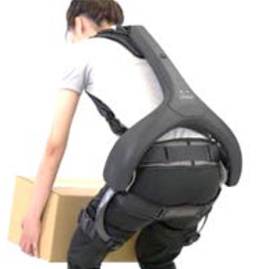
Powered Lifting Support
Hard exoskeletons for powered lifting support include exoskeletons that provide back support during a wide variety of tasks ranging from lifting heavy loads to working in stressful postures (see Figure 1). The Exia from German Bionic, for example, combines motion control with physical AI to provide up to 84 lbs (38 kg) of lifting augmentation per movement. The Exia AI model trains on billions of data points gathered across different users and industries. During actual use, the AI model continues to customize its performance for each worker, getting better and better over time.
Soft Exosuits
Rigid exoskeletons can hamper movement or be uncomfortable. Some tasks require greater flexibility or manual dexterity than can be provided by rigid versions. This has led to the emergence of soft fabric-like exosuits (see Figure 2). Exosuits are designed to protect against repetitive stress injuries in workers during tasks like bending, stretching overhead, or holding heavy objects.
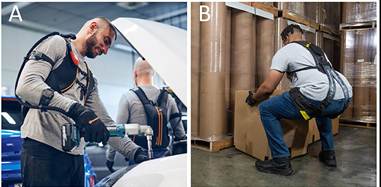
Biometric Ergonomic Feedback
Seemingly harmless movements repeated over time can lead to musculoskeletal disorders (MSDs) that can cause pain, lost work hours, and disability. The focus on human-centric design has led to the development of biometric ergonomic feedback devices. These devices help workers move more safely in the workplace and help the workplace better adapt to their needs. It’s a case of the motion control technology developed for Industry 4.0 now being applied in human-centric Industry 5.0.
At-Risk Posture Alerts:
The combination of Industry 4.0 data gathering and AI makes it possible to use video feeds from pre-existing systems to analyze activities across almost any facility. At the base level, these types of systems can review tasks to identify dangerous postures and dynamics for future education. Once the correct models are built, workers can be monitored in real time and given visual, audible, or haptic (vibrational) alerts when they move or stand in ways that could cause injury over time. An alternative approach involves the use of wearable sensors capable of tracking a worker’s skeleton in 3D space. If the worker reaches at an angle that could lead to an RSI, the system provides haptic feedback to correct the posture.
Dynamic Workstations:
Good workplace ergonomics are essential to the avoidance of MSDs and RSIs. In the new human-centric workplace, tables, assembly rigs, and pick-and-place stations can be equipped with motion-control systems that support dynamic reconfigure ability. The machine scans the worker’s RFID tag or accesses biometrics upon login. The equipment automatically adjusts for the height and tilt required by the specific individual and the task they’re undertaking.
Robots with agency – AI gets physical
The most common interaction with AI at present is a virtual exchange with a large language model (LLM) through an electronic device. Although misinformation and errors are always possible, risk of real physical harm is minimal. With the increasing adoption of robots with agency―physical AI―the possibility of property damage and even injury to workers is much higher. That’s why a concerted effort is underway to establish methods for safe and efficient interactions between workers and physical AI.
Classic industrial robots were high-mass machines programmed to perform specific motions at high velocity. To protect human workers, these robots were placed in locked cages that could only be opened when the robot was powered down. Fast-forward to the cobots of today. Cobots are designed to operate in close proximity to human beings. Devices feature rounded edges, low speed and low force motion, and safety sensors and programming to ensure safety by design (see Figure 3).
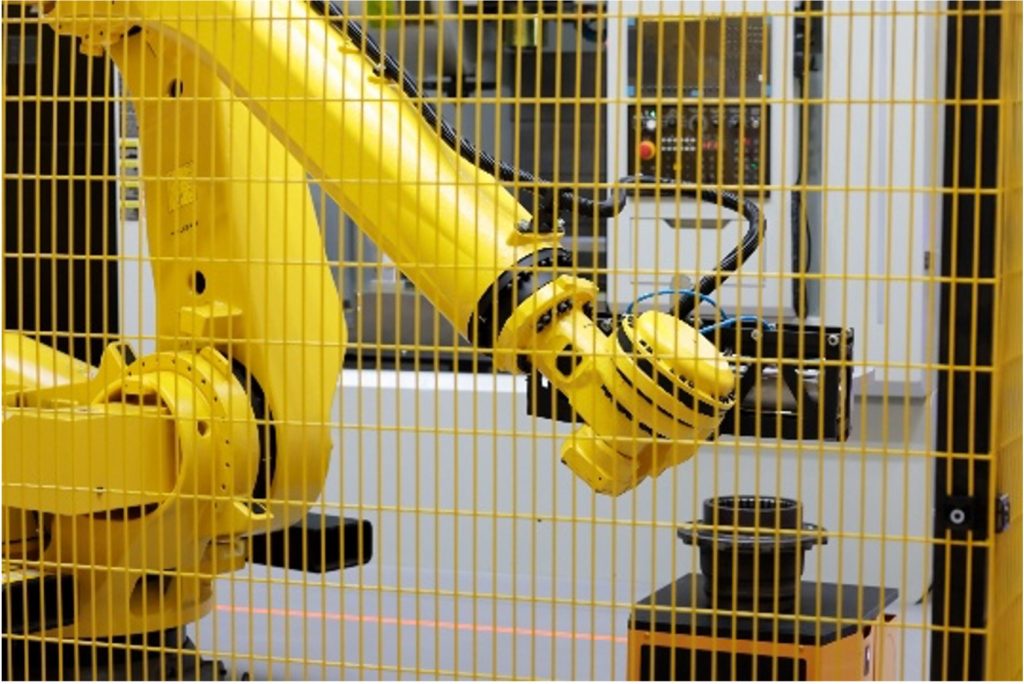
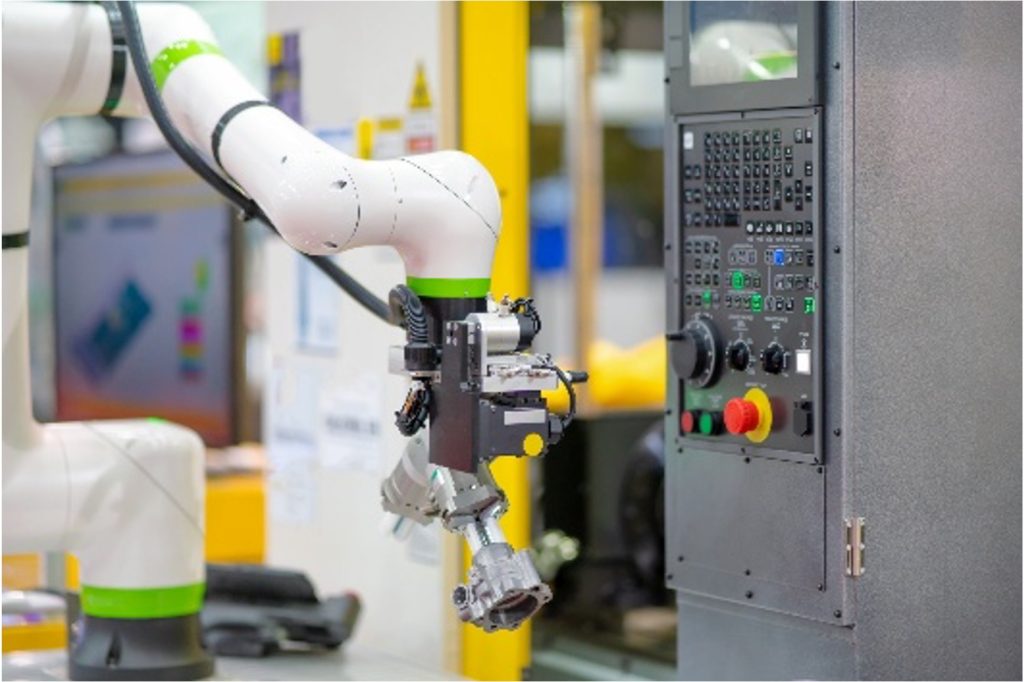
Figure 3 : Classic industrial robots are kept in cages to protect workers from high velocity movements (left). Robots are designed for human interaction, with rounded edges and low-speed, low-force motion (right).
The Cobot-human partnership
As humans and robots with agency increasingly work side-by-side in the industrial environment, engineering teams have reimagined the human machine interface and programming of physical AI robots. Key focuses include safety and ease of use.
Legibility of Intent
A modern automated warehouse, for example, can contain hundreds to hundreds of thousands of autonomous mobile robots (AMRs) operating in proximity to workers. To prevent injury and maximize efficiency, AMRs need to telegraph their next movements to nearby workers. They can do this through visual and audio cues. Simple approaches like turn signals or wearable haptic proximity sensors that vibrate when robots are near are quick and inexpensive, but can be overlooked in the noisy, often cluttered industrial environment. Designers are exploring more intuitive approaches that mimic human body language, such as reductions in speed/cadence and the use of articulating sensors that can signal intent with an “eye gaze.” Now, an AMR turning toward a bin can signal its intentions by slowing down and “glancing” toward the object, just like a person would.
“Follow-Me” Tugger Trains
Autonomous tugger trains, which consist of AMRs that pull carts on fixed routes, have become increasingly common in manufacturing and logistics. With the Industry 5.0 focus on human-centric design, tugger trains have also become collaborative robots that can increase human safety. Festooned with sensors―lidar, laser range finders, 3D cameras―these tugger trains have the ability to follow human operators from point to point. During “follow me” operation, the tugger train handles the load while its human partner performs the tasks requiring adaptability. In some cases, follow-me technology can be used to program routes for the train to follow autonomously. The human operator leads the train on the desired path and the system repeats it. The result is a dynamically reconfigurable robotic system with a very low bar to entry.
Improved usability
Controlling a robot by writing code for every single action is time-consuming and complex. Any time any part of the process changes, the code must be rewritten, tested, and debugged. With the assistance of AI, robots are emerging that can be trained almost as easily as a human.
VLA Models
Robot policy emerged as a solution to programming complexity. A robot policy is a framework that enables the robot to identify its current environment and configuration―its state―then map that state to a set of actions it needs to take to achieve the next objective. Even then, robot policy refinement is challenging. Enter vision-language-action (VLA) models.
VLA models are analogous to the LLMs and vision-language models (VLMs) that power generative AI. VLA models are pre-trained on large, heterogeneous data sets, frequently using VLMs and LLMs as starting points. Motion-specific training for the VLA includes a wide range of scenarios and tasks. Instead of training for a narrow set of tasks, the robot can adapt any of a large set of options to its needs.
During operation, the robot first determines its state by comparing the data it gathers to the generalized VLA data set. Because VLMs can include a variety of types of data such as images, video, and text, a single VLA can be applied to many different scenarios. Next, the VLA’s LLM training set equips the robot to understand audible natural-language commands (“Pick up the blue bracket and hold it here.”) With the aid of the VLA model, the robot can now calculate the trajectory and force needed to assist without any manual programming. If there are any changes to the environment, object, or task, the robot has the resiliency to rapidly adapt. The technology is still in its early days but impressive demonstrations have already been conducted.
Shadowing AI
Another solution to the programming challenge is programming by demonstration (PbD), also known as imitation learning. An early form of imitation learning was manual guided teaching, in which the user would move the end effector of a cobot through the desired sequence. The robot would then follow that sequence going forward. With the addition of Industry 4.0 instrumentation and AI, projects are now Underway in which the cobot observes as the human operator performs a task, then mimics the process. The information gathering also makes it possible for the cobot to assist the technician with tool orientation or by applying a steadying force.
The human-centric paradigm of Industry 5.0 promises to bring industrial operations into a new era of resiliency, efficiency, and sustainability. Built upon the foundation of Industry 4.0’s focus on connectivity and automation, Industry 5.0 combines the best the machines and humans have to offer. The resultant technologies increase worker safety and productivity while leveraging the unique human traits of creativity, adaptability, and problem solving.