

A phased retrofit replaced aging relays and a wye-delta starter with a PLC and soft starter, extending equipment life, sharpening control, and cutting downtime.
For years, a site producing plastic containers operated a 50HP granulator to shed off-spec product into scrap it could sell. In this Machine Design September 2026 article titled A Softer Start for Hard Plastic Production, Pete Baker of Quality Sciences Systems details how one failed contactor led the site to overhaul the entire control panel instead of settling for a quick fix.
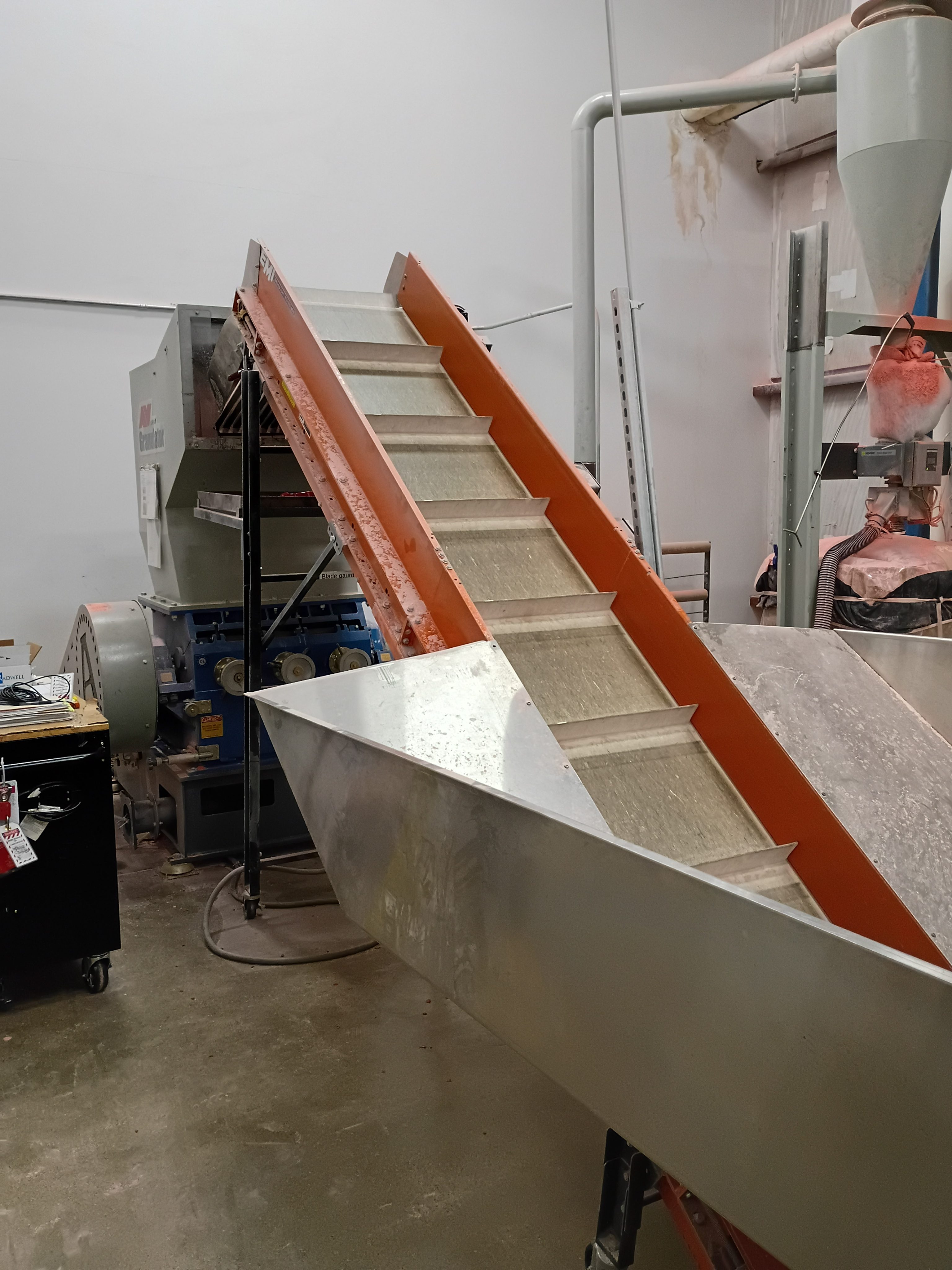
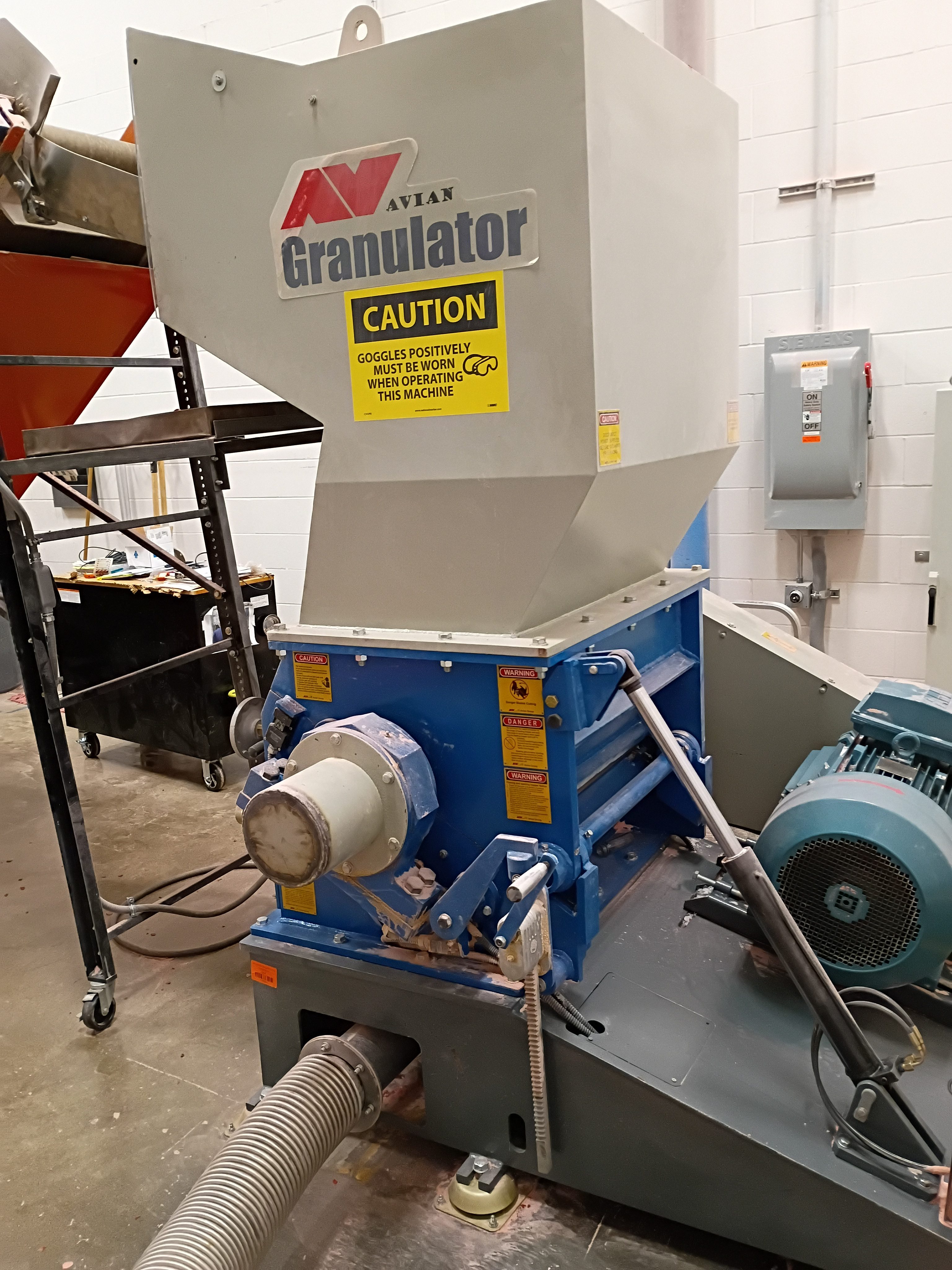
Hardwiring was the weak link
The existing control panel relied on a handful of relays, electronic timers, and a wye-delta motor starter. A wye-delta starter provides an economical way to start a big load—first at lower current/torque, then at full speed—but it depends on three contactors switching in an exact sequence driven by relays and timers. All those devices are subject to wear, and eventually a contactor failed.
Rather than just patch the failed part and wait for the next breakdown, the Quality Sciences team planned a four-phase upgrade:
- Phase 1: replace the hardwired controls with a programmable logic controller (PLC) and human-machine interface (HMI), while keeping the wye-delta scheme in service.
- Phase 2: replace the wye-delta starter with a new electronic soft starter.
- Phase 3: add a sensor to monitor the granulator current draw, enabling the PLC to stop the infeed before the equipment becomes overloaded.
- Phase 4: add sensors to monitor feed bin levels for indication and improved control.
Although the team has used AutomationDirect’s CLICK PLCs many times, the Productivity1000 PLC won out for this job. AutomationDirect originally offered this PLC only in a stackable micro form factor, with all input/output (I/O) on separate modules. A newer “mini” version, however, includes some onboard I/O, providing an all-in-one solution to fit this project’s tight enclosure footprint while leaving room to grow.
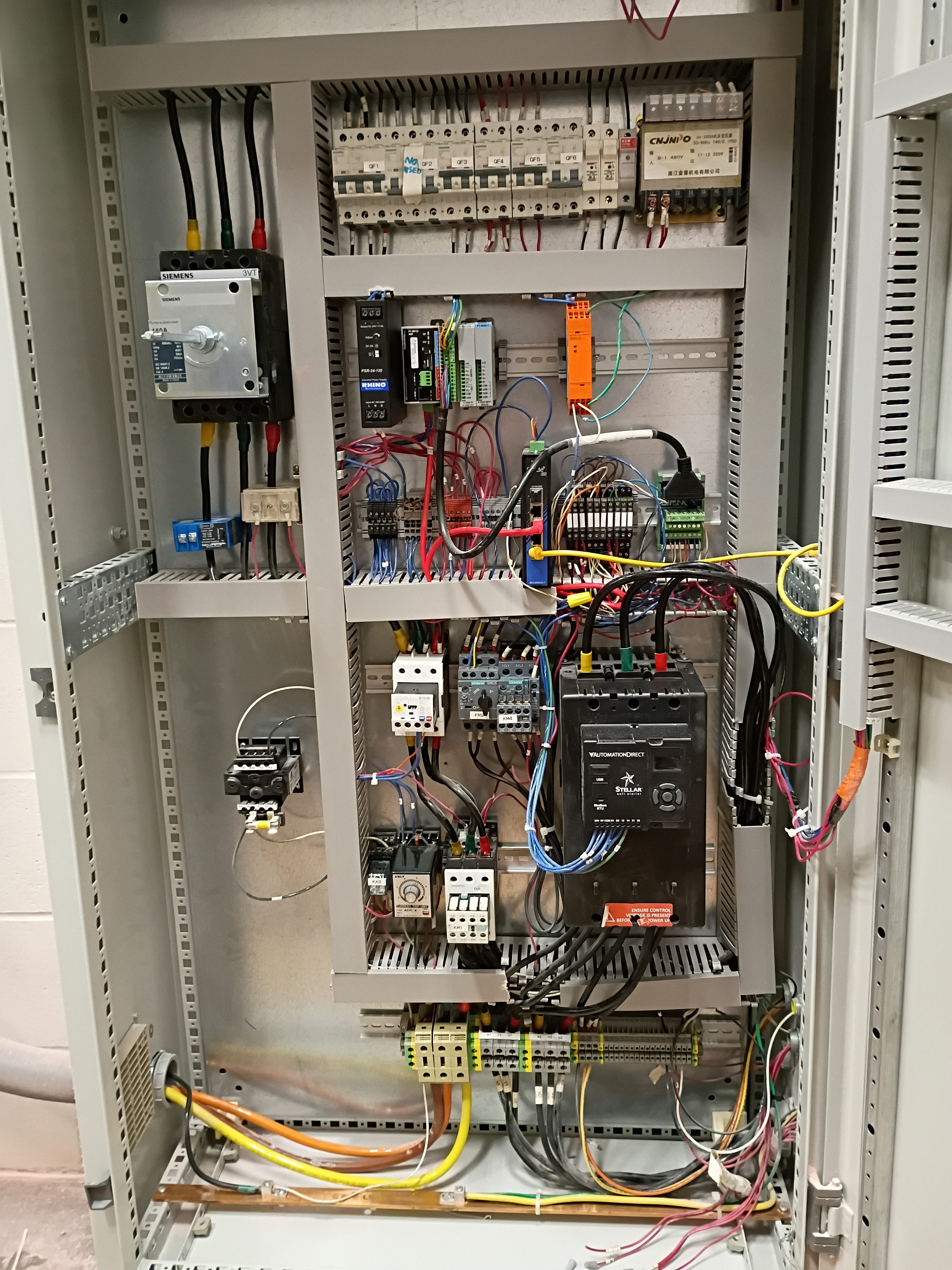
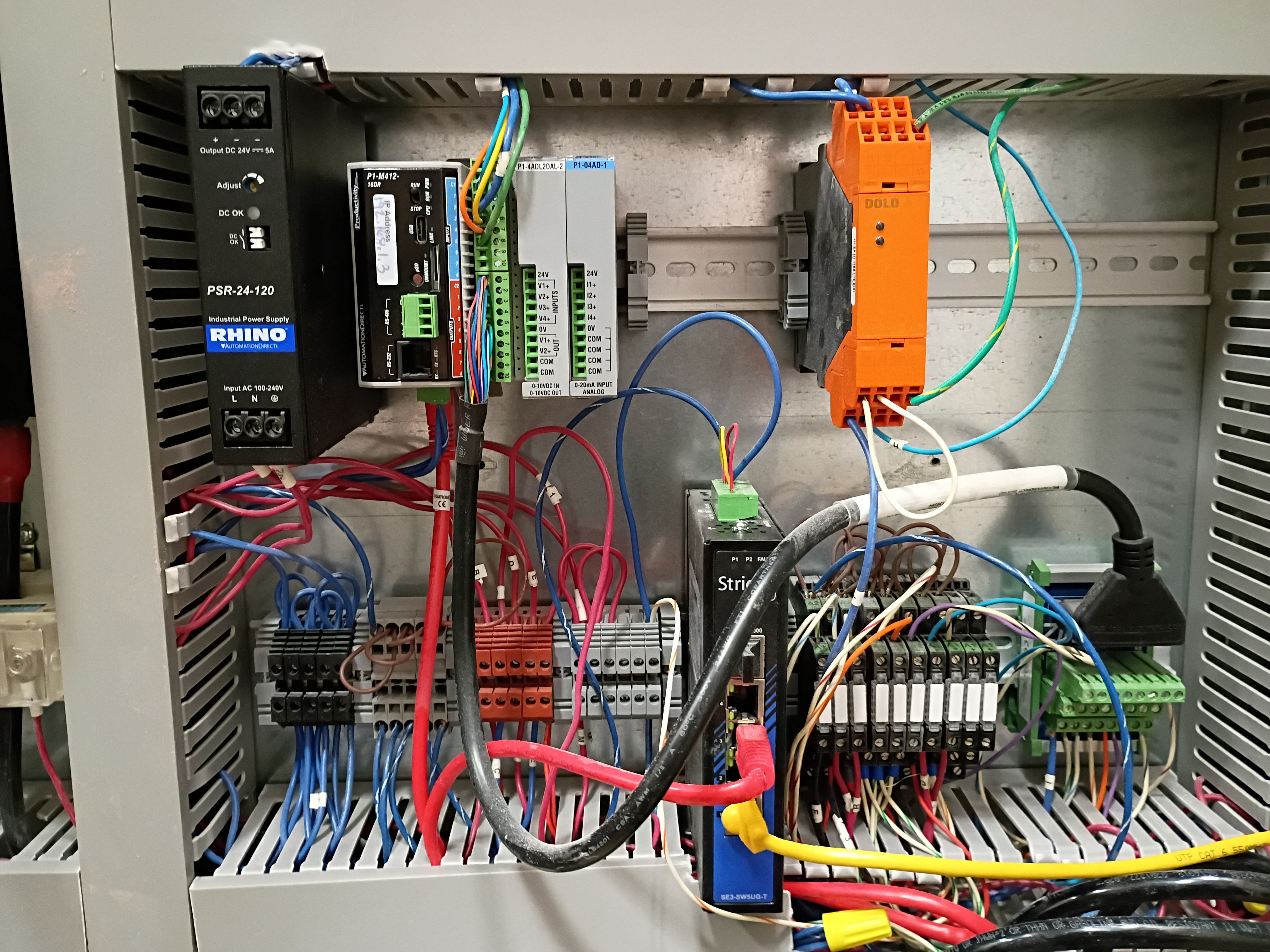
Sizing the new Stellar soft starter benefited from a call to the AutomationDirect support team: while the grinder’s full-load current pointed to one size, an application engineer recommended sizing it a step higher for this type of high-torque equipment.
The PLC and C-more HMI went in first, after bench testing and simulation, and the changeover took five days from start to finish. The soft starter followed two weeks later, easily programmed using a preset “grinder” profile with a ten-second ramp time.
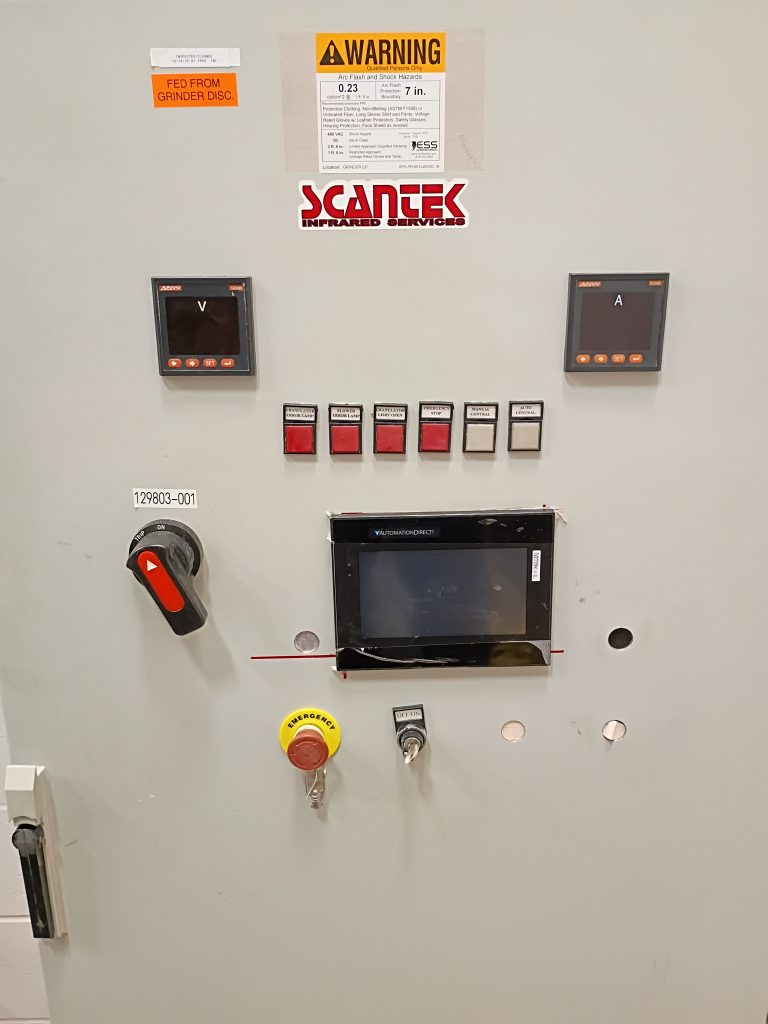
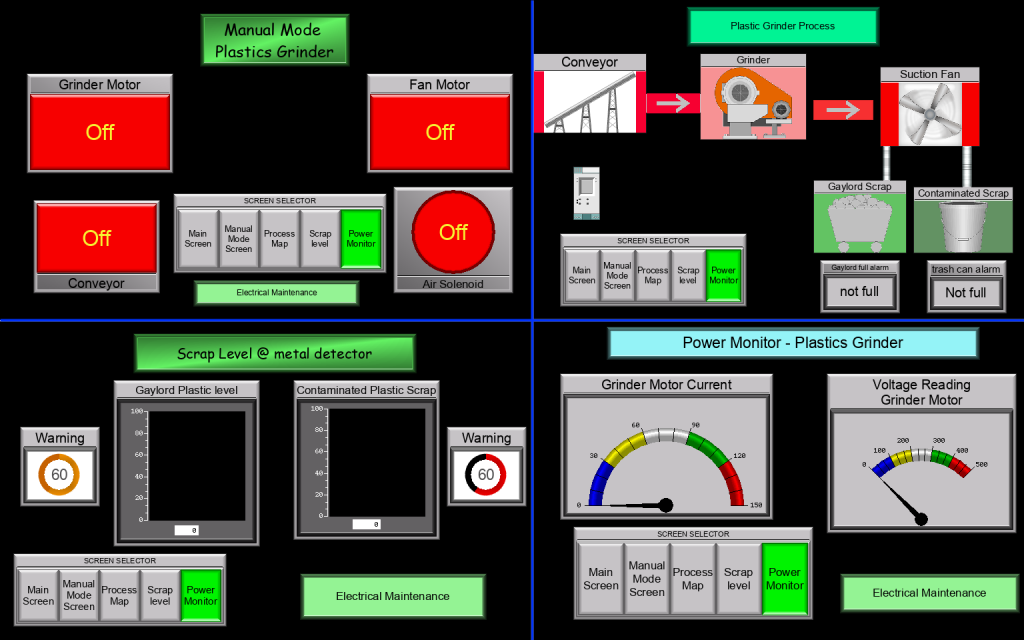
Once current monitoring came online in the third phase, the PLC could stop the infeed before jams formed, all but eliminating cleanouts that once cost up to 45 minutes each. Now operators work using clear status screens instead of guesswork, and the panel is ready for upcoming improvements, including bin-level sensing.
What began as a reactive repair prompted a shift to a proactive modernization project. After replacing aging and outdated hardwired components with a PLC, HMI and soft starter, the granulator now starts smoother, runs more consistently, delivers clearer visibility and gives maintenance personnel a more reliable way to diagnose problems before they become downtime.
See how AutomationDirect Productivity PLCs, C-more HMIs, Stellar soft starters, and our complete portfolio of automation products can help you achieve upgrade successes like this on your plant floor.