

Mounting a Wi-Fi PLC directly atop a rotating aeration bridge keeps the equipment on track and adds real-time stall protection.
One wastewater treatment plant’s aeration basins have run fairly well for 30 years using the same rotating bridge equipment, but there was no effective way to warn operators if anything went awry. In an August 2026 Automation World article, Small PLC Retrofit Delivers Big Reliability Gains For Wastewater Aeration, integrator Micky Franks of MF Automation & Controls explains how he gave the aging bridge the position feedback, current monitoring, and wireless link it never had.
Open loop operation can drift off track
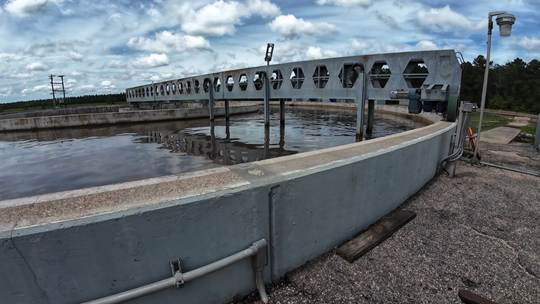
At the facility, each circular basin’s rotating arm sweeps around like a slow clock hand, with diffuser wands keeping the basin water oxygenated. Accumulated sediment at the bottom periodically snags the arm, and the original design had almost no way to flag it, just basic motor overload protection. When the overload didn’t trip fast enough, momentum could cause the bridge to dislodge, requiring the end user to call in a crane to reset it.
Equipping the automation
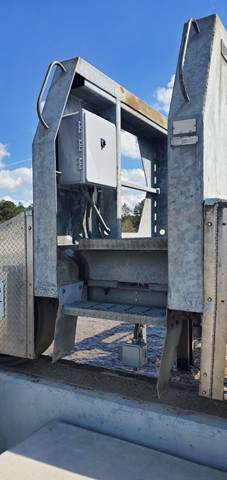
Adding control wiring would be problematic, since the moving bridge’s only electrical connection to land used brushes feeding power to the motor. Instead of trying to bring sensors to a fixed control panel, the team mounted a programmable logic controller (PLC) onto the rotating structure and made the power feed continuous. Motor starting was upgraded to use a soft start—reducing electrical and mechanical stresses during startup—and the PLC was configured to communicate wirelessly with the plant’s supervisory control and data acquisition (SCADA) system.
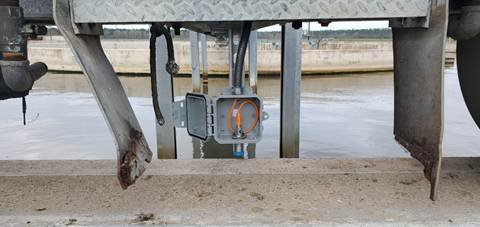
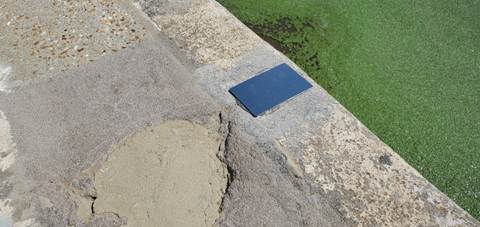
A Contrinex quick-disconnect inductive proximity sensor added on the bridge detected metal targets epoxied around it, enabling the PLC to calculate rotation speed and direction. The team installed a current transducer on the motor circuit to send a signal flagging high-draw conditions faster than the old overload ever could.
A small PLC handles a big wireless job
Since the plant’s main system already runs on an AutomationDirect Productivity2000 platform and personnel were well pleased with the setup, the team chose another AutomationDirect PLC for this project, the CLICK PLUS PLC. The CLICK PLUS was compact enough to fit the available space (which didn’t need a full rack-based system) with capability to communicate directly to the facility’s Ignition SCADA platform over Wi-Fi, giving operators real-time visibility.
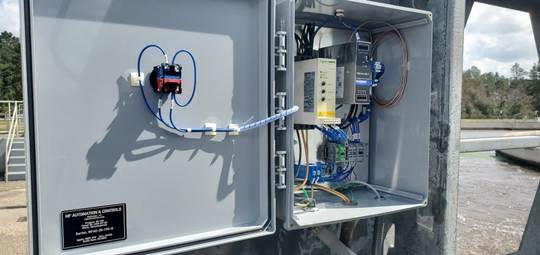
This has facilitated nearly immediate stall detection, with target-to-target timing around 20 seconds under normal rotation so that a 30-second delay automatically shuts the bridge down and initiates an alarm, well in advance of a damage-causing condition. Current monitoring adds a second layer of warning, flagging a developing drag condition before it would trip a standard overload. As a result, operators now see problems on control screens instead of waiting to find them on rounds.
Nearly 30 years after it was first commissioned, this aeration bridge finally has controls that can tell somebody when it’s in trouble.
All types of ageing equipment can benefit from similarly targeted upgrades and retrofits that add new sensing and connectivity to improve control and catch trouble early. Explore AutomationDirect’s full lineup of controls and automation products to see what’s possible.