

A wastewater treatment utility is moving away from aging control hardware by replacing specialized components with easy-to-use programmable logic controllers.
Like many small utilities throughout the country, the Harvest-Monrovia Water & Sewer Authority in Alabama was faced with supporting an aging mix of control technologies. Wesley Benefield of RTUDirect wrote this article for Automation.com April 2026, titled Case Study: Small Municipality Streamlines and Standardizes Wastewater Treatment Sites with PLC Hardware, describing how the team developed a standardized, PLC-based control architecture that simplifies maintenance, reduces long-term risk, and positions the utility for decades of scalable growth.
Subdivision Wastewater Treatment Systems
The utility operates numerous decentralized wastewater sand filters, each serving individual housing developments. These systems rely on local septic tanks at each house for primary treatment, followed by centralized sand filtration, UV disinfection, and subsurface dispersal.
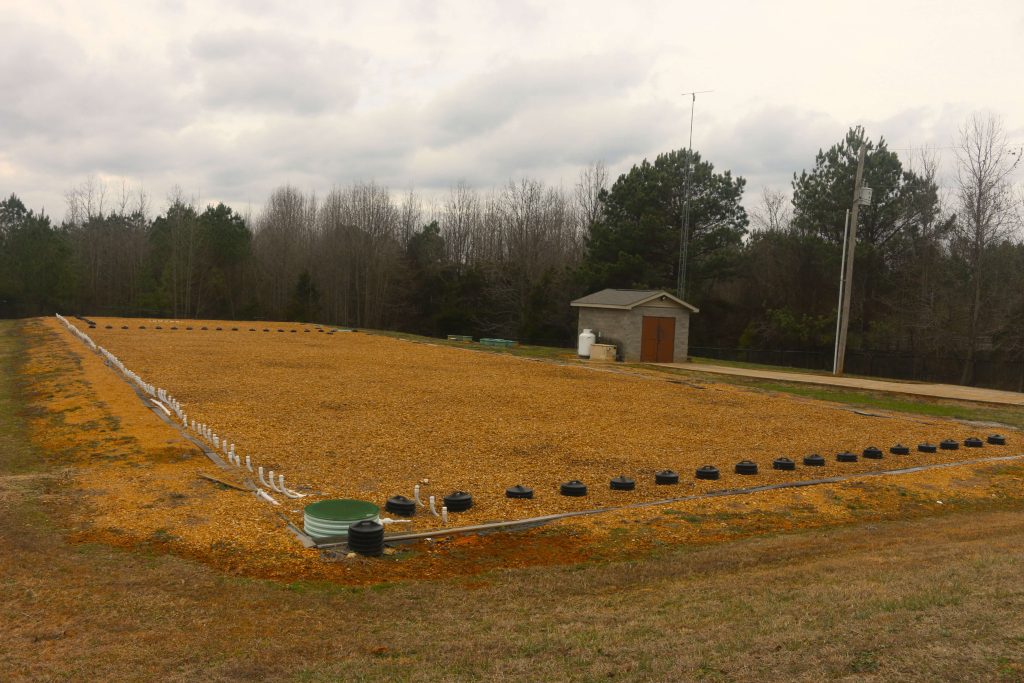
To maintain reliability, wastewater systems evolve cautiously, and historical designs emphasized robustness over real-time data access. This meant relying on float switches, basic flowmeters, and manual overrides for a long duration, before implementing digital communication and controls.
Over time, the utility integrated a patchwork of specialized circuit board controllers (originally intended for HVAC applications), legacy PLCs and HMIs, and other elements. While functional, this approach became increasingly fragile as components became obsolete, documentation disappeared, and experienced personnel retired. The lack of standardization made upgrades and troubleshooting cumbersome and introduced risk.
Moving to Open Hardware
To address these challenges, the utility engaged industry veteran Wesley Benefield, PE, to help define a modern control strategy centered on simplicity, openness, and long-term support. The resulting solution standardized on AutomationDirect BRX-series stackable micro brick PLCs paired with C‑more human-machine interface (HMI) touchscreens. Key selection criteria included free programming software, strong training resources, flexible I/O expansion, long product lifecycles, and fast, transparent parts availability.
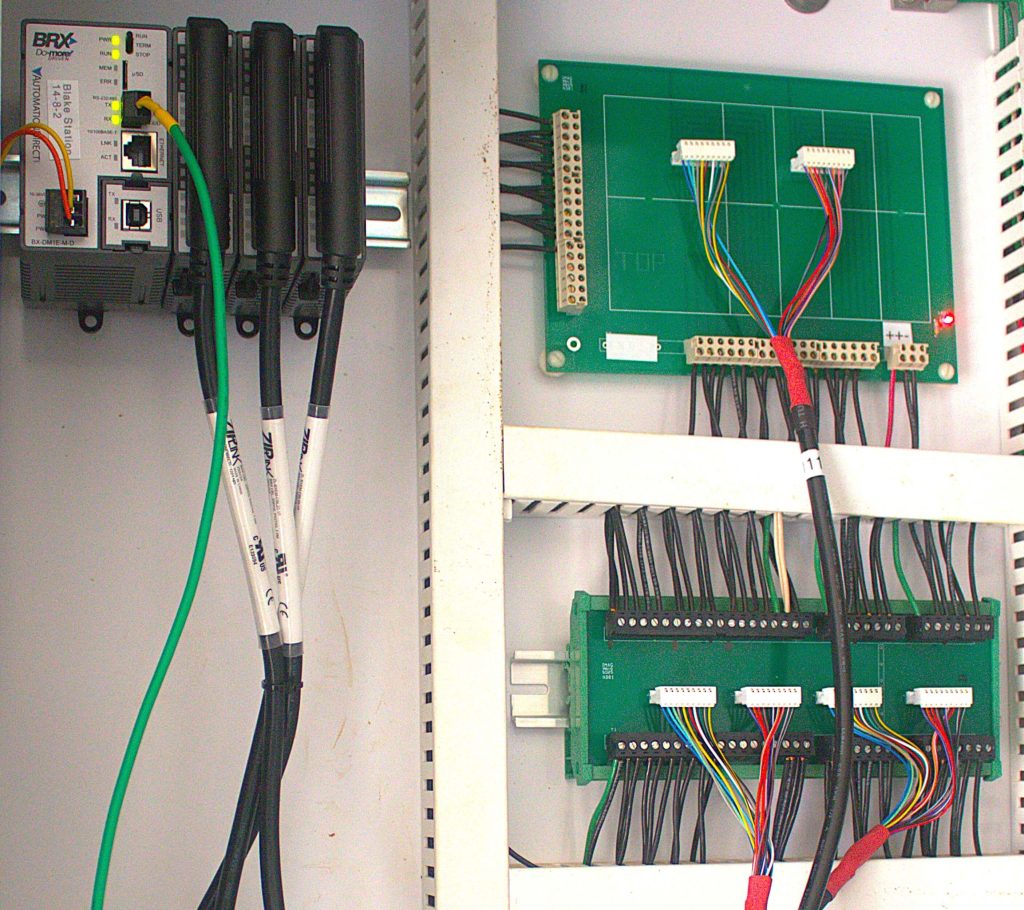
The PLC platform’s modular and stackable design supports tailoring each installation to its specific number of level floats, pumps, and distribution zones, while preserving a common core architecture. Auto-detection of I/O, tag-based programming stored on the controller, and ample onboard and SD-card memory enable built-in data logging and straightforward diagnostics, while integrated web server capabilities and broad protocol support simplify SCADA integration.
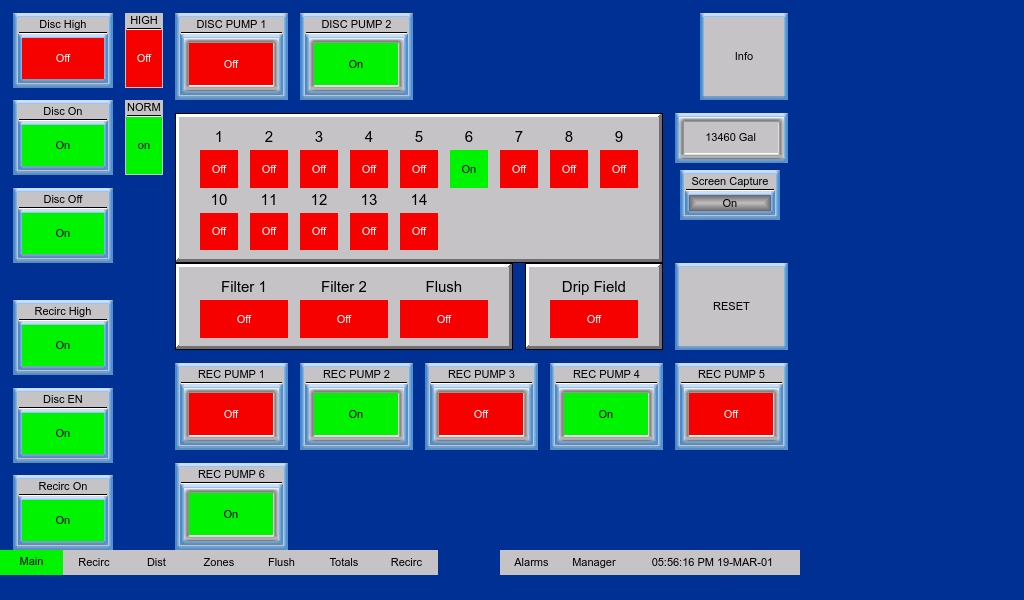
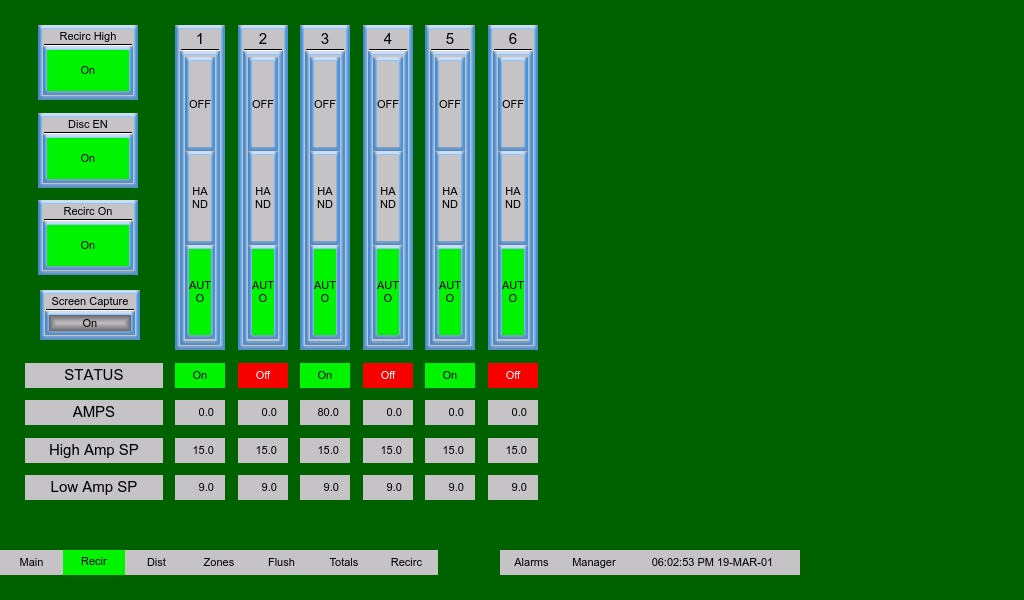
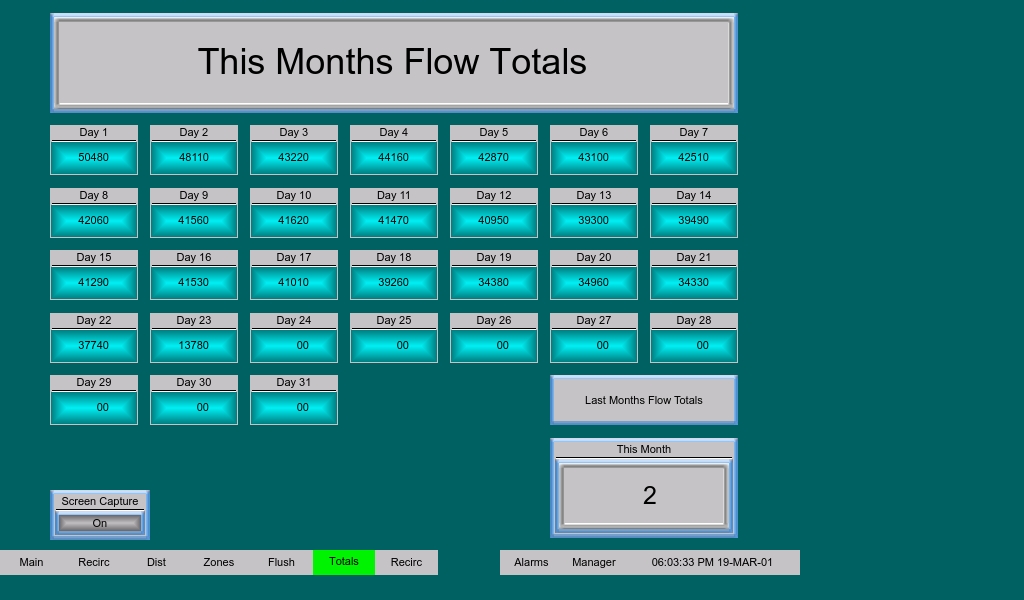
The migration of hand/off/auto (HOA) functionality from hardwired selector switches to the HMI is one of the most notable design shifts. This reduced cabinet complexity and cost, while improving flexibility. The touchscreen interface also provides richer operational statistics, detailed diagnostics, and intuitive commissioning tools—valuable for both installers and operators.
Remote monitoring is handled via low-bandwidth cellular connectivity, replacing an earlier radio-based SCADA system that had reliability issues. This approach supports telemetry, alarming, and analytics today, while remaining scalable for future needs.
Ready for Growth
With roughly half of its 15 sand filter sites already upgraded, the utility now has a repeatable and contractor-friendly automation standard. As regional growth continues, the modernized control platform ensures that wastewater infrastructure can expand reliably and sustainably.
While those in the industry can appreciate the system’s elegant design, the public will ideally never have to think about it. Residents can maintain the practical assumption that, like magic, water comes out of the tap and disappears down the drain to … somewhere.
Check out the complete AutomationDirect portfolio, to find the products you need for creating efficient and easily-supported automation projects of any type.